We have tried to write all this about inventor telescope without leaving any margin of doubt lying in you. If there is any margin, do remove it.
Another Great inventor telescope Article
Reflecting Telescopes
When people think of telescopes, reflecting telescopes are usually the last things that come to mind. Rather, people tend to think of a straight tube with lenses at either side. This is unfortunate, since there are several ways to bend light so that it is magnified to the point where a person on the ground can make out the features on Jupiter, the billowing gasses of a distant nebula, or the light of distant stars. In fact, if a stargazer wants to peer into the inky voids of space with a scope of manageable size, a reflecting telescope will serve them well.
Reflecting telescopes use mirrors to magnify images, allowing the image to be enlarged a few times before coming through the eyepiece. This is simpler to implement than a standard, straight-through refracting telescope, as it allows several smaller adjustments to the image than a few, very large changes with lenses. And, by doing this with mirrors, the design of the telescope can be made much more compact, allowing more magnifications of an image in a smaller telescope.
In order to understand reflecting telescopes, you must begin by understanding the fact that there are two methods of focusing light so that objects seem closer. The first method is through lenses, which use refracting to bend light and focus it. The second method is with mirrors, which can be shaped to reflect light in such as way that small, distant objects appear to be very close and easily visible.
There are two general designs for reflecting telescopes: the Newtonian and the Cassegrain and its variants. The first type, Newtonian, is a very simple design and it is very popular with amateurs who want to home-build a telescope. In the Newtonian design, there is one large mirror at the base of a long tube, and the mirror is focused onto a flat mirror that redirects the image toward an eyepiece. This design was originally created by Isaac Newton, and it was the first successful design for a reflecting telescope.
The second type of reflecting telescope, the Cassegrain and its variants, uses two mirrors to create the image. One large mirror is set up at the base of a tube, with a smaller mirror facing it at the top of the tube. The light comes in through the top, is focused by the larger mirror, and reflected back by the smaller mirror and sent through a hole in the larger mirror and on to the eyepiece. This makes the Cassegrain telescope look like a refracting telescope, though they function very differently. However, their ultimate aim is the same: to allow people to see things that are very far away.
When looking for a telescope, reflecting telescopes are some of the best that can be found. They are effective, easy to use and, in some cases, easy to build ? making them the preferred choice for professional astronomers and backyard hobbyists. So, when thinking about telescopes, don?t just think picture the lenses that usually come to mind, think about remarkable properties of mirrors and reflecting telescopes.
About the Author:
Telescopes HQ. Your guide to telescopes from buying telescopes, how telescopes work and who invented telescopes.
Featured inventor telescope Items
Canon 18x50 Image Stabilization All-Weather Binoculars w/Case, Neck Strap & Batteries

Canon 18x50 Image Stabilization All-Weather Binoculars w/Case, Neck Strap & Batteries
A pair of all-weather resistant, 18x50 binoculars that features image stabilization Imagine riding in a truck over a bumpy back country road, and seeing a perfectly steady image in your binoculars! Other features include - a water resistant,non-slip rubber coating for protection against rain&splashing water&secure handling Long eye relief that allows the use of eyeglasses without vignetting of the image Wide 67 field of view Doublet field-flattener for sharp, distortion-free images from edge to edge Powered by 2 AA batteries Includes - deluxe carrying case, wide strap,&2 AA Alkaline batteries Canon 3-Year USA / 1 Year International Warranty
Monster

Dino-opoly

Dino-opoly
Rule the land of the dinosaurs with this traditional property trading game with a prehistoric twist.
- Monopoly-style game with dinosaurs
- Game board features "properties" of favorite dinosaurs
- 6 sculpted pewter dinosaur tokens
- Dino Deeds cards feature fun facts about a particular dinosaur/property
- For 2-6 players
Safety warning: This product contains small parts that may present a choking hazard for young children.
Telescope\Pirate Adult

Telescope\Pirate Adult
9 1/2 inch long telescope of heavy duty plastic. May vary slightly from shown. Not intended for children under 3 years.
Out of Sight: Pictures of Hidden Worlds

Out of Sight: Pictures of Hidden Worlds
The NexStar User's Guide

The NexStar User's Guide
Celestrons NexStar telescopes were introduced in 1999, beginning with their first computer controlled "go to model, a 5-inch. More models appeared in quick succession, and Celestrons new range made it one of the two dominant manufacturers of affordable "go to telescopes. Michael Swansons online discussions with literally thousands of NexStar owners made it clear that there was a desperate need for a book such as this - one that provides a complete, detailed guide to buying, using and maintaining NexStar telescopes. Although this book is highly comprehensive, it is suitable for beginners - there is a chapter on "Astronomy Basics - and experts alike.
Hubble Space Telescope
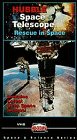
Hubble Space Telescope
Journey into space with the Astronauts on one of the most important and spectacular Space Shuttle Missions ever - the critical mission to repair the Space Telescope. Plus, see the first dramatically improved deep space images from Hubble's newly repaired cameras. 50 minutes.
Headlines on inventor telescope
Tunisia: Country Celebrates International Year of Astronomy 2009 (AllAfrica.com)
Thu, 09 Oct 2008 07:43:43 GMT
The Tunis Planetarium has set up a rich program of activities to celebrate the International Year of Astronomy.


posted by John Ramsey @ 3:51 AM
0 comments


0 Comments:
Post a Comment
<< Home